Sunday, May 1, 2011

Suspended Animation: Life after Death

(Pic #1: Title for Cryonics with a person frozen in ice)


I. Introduction

What if we were able to stop the vital organs in our body and then start them up again later on? This process is called suspended animation. This seemingly science fiction idea may actualy have some truth to it, or at least that is what the scientists at Alcor and many other Cryonic research facilities believe. By using cryogenic procedures plus upgraded science equipment they have been able to preserve people, frozen in tubes for preservation. If they do in fact achieve this, and bring people back to life then couldn't we question, what is death?

II. History/Inventor
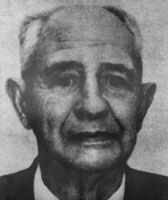


(Pic #2: Pictured above is James Bedford)


The first case in which someone was cryonically preserved was back in 1967. This first subject was Dr. James Bedford(Pic #2). Although all he preserved was his head. Though this may have been the first case in which the whole procedure was preformed, it is in no way the first time the theory has been brought up. The idea of this process has been going around for awhile but no one has gone out and tried to make it a reality until ACS and Alcor, to name a few, were created.


III. How it works


(Pic # 3: One of many Cryonic tubes)

When a person, who has signed up/paid for his or her body to be cryonically stored dies, a group of scientists will be there as soon as possible to prepare the body. So far there have been 100 people go through the procedure of cryonic preservation and put into tubes (Pic #3). The video below will show the procedure in detail:


Video: http://www.youtube.com/watch?v=bb07pKsCOjI&feature=related

The only problem to this is cost. You either have the choice to preserve your brain/head or your whole body. The brain/head is considerably less compared to that of the whole body. Going by ACS() costs there are three options: Option 1= $155,000, Option 2= $53,000, Option 3= $33,000. The highest priced option uses the most advanced form of preservation then the other 2 options. Another reason as to why it is so expensive is because they have to maintain the tube also with liquid nitrogen so you don't thaw out.

IV. Effect on Humanity

(Pic #4: Pictured above is a Cryo tube from the videogame Halo: CE)


As many scientists are saying, cryonic sleep isn't that far away from our grasp. If scientists working for cryonic organizations do in fact figure out a way to freeze a person then bring them back from being frozen, there could be many uses for it in the future. Some of these could be: freezing someone until a cure for the disease they died with is created and space travel. If someone were to die of cancer, for instance, if they were to be frozen and brought back later on when we had a cure, it could save their life and many others. Though this depends on whether or not the person was not damaged in the cryogenic procedure. As seen in many video games/ movies, cryonic sleep(Pic #4) has been used to make long space voyages shorter.


V. Journal Article


This journal article talks about how suspended animation could be used for saving lives and how it would help with surgery. He/she says they could use suspended animation to do research on other diseases in an attempt to find the cure for them. It also talks about how cryonic procedures have been used and what had been learned from the results of those tests.


Source: http://journals.lww.com/ccmjournal/Abstract/1996/02001/Suspended_animation_for_delayed_resuscitation.4.aspx
VI. References

Pics:

1. http://www.google.com/imgres?imgurl=http://www.perfectmemorials.com/blog/wp-content/uploads/2008/12/cryonic_tank.jpg&imgrefurl=http://www.perfectmemorials.com/blog/cryonics-how-about-a-raincheck/&usg=__SV9TBcC5ivcZEN574_rNzetaM8c=&h=300&w=300&sz=18&hl=en&start=0&sig2=_H7WgXMLhRMEa5Qqd2pBSg&zoom=1&tbnid=UIbn29coD3BuBM:&tbnh=142&tbnw=146&ei=q5O9TfWCKIbVgQf9qtijBw&prev=/search%3Ftalks about how suspended animation could be used for saving lives and how it would help with surgery. He/she says they could use supended animation to research other diseases in a hope to cure them. It also talks about how cryogenic procedures have been used and what had been learned from the results.


q%3Dcryonics%26hl%3Den%26sa%3DX%26rlz%3D1R2ADSA_enUS404%26biw%3D1259%26bih%3D711%26tbm%3Disch%26prmd%3Divnslb0%2C202&itbs=1&iact=hc&vpx=676&vpy=298&dur=1607&hovh=225&hovw=225&tx=124&ty=106&page=1&ndsp=28&ved=1t:429,r:24,s:0&biw=1259&bih=711
2. http://halo.wikia.com/wiki/File:Cryo_pod_01.png

3. http://www.alcor.org/Library/html/BedfordSuspension.html

4. http://www.google.com/imgres?imgurl=http://www.pharmainfo.net/files/u4934/cryonics-top.png&imgrefurl=http://www.pharmainfo.net/vbsishwarya/cryonics-science-immortal-life&usg=__Fms2qvmUFgo96QhhpeVDKPVJ8wU=&h=247&w=400&sz=143&hl=en&start=53&sig2=icdRv_lyh-9oHjdbGvuf8Q&zoom=1&tbnid=a8EZHAcaTb85eM:&tbnh=99&tbnw=161&ei=XhK-Ta3OEcXUgQfqzIjrBg&prev=/search%3Fq%3Damerican%2Bcryonics%2Bsociety%26hl%3Den%26sa%3DG%26rlz%3D1R2ADSA_enUS404%26biw%3D1259%26bih%3D711%26site%3Dsearch%26tbm%3Disch0%2C907&um=1&itbs=1&iact=hc&vpx=574&vpy=376&dur=7551&hovh=176&hovw=286&tx=192&ty=80&page=3&ndsp=29&ved=1t:429,r:3,s:53&biw=1259&bih=711
Video:

5. http://www.youtube.com/watch?v=bb07pKsCOjI&feature=related

Websites:

6. What Cryonics is (n.d.) Retrieved April 29, 2011. from Alcor Web site: http://www.alcor.org/

7. Prices/Funding (n.d.) Retrieved April 29, 2011. from American Cryonics Web site: http://americancryonics.org/prices.html

Invention of the iPod
By: Elliot Gonzalez


tHE iPOD


Introduction:

Digital music players in the early 2000’s had been big and useless. Many people still were using the CD players and Walkman’s, but in 2001 Apple revolutionized the way the world listens to their own music. The iPod was released on October 23, 2001; people’s reaction to the new device was hostile and critical, no one believed that it was going to turn out the way it has now. Tony Fadell and Steve Jobs have changed the media and entertainment industry forever when he released his new invention to the world.


Discovery:

The iPod was simply just a dream that turned into an idea that then turned into a world phenomenon. Tony Fadell had the idea of the iPod, but none of the companies that he shared the idea with, made into a reality. Real Networks and Phillips refused to take the idea into considerations, but Apple thought the idea was brilliant and it was a brilliant move by their part and not a good one by the other companies. When Fadell began working with Apple, Steve Jobs immediately began working with Fadell on the project. To create the first iPod, it only took them a year to do. The first modeled iPod had 5 GB Toshiba hard drive that was not bigger than a quarter, an operating system from Pixo, a large display, a lithium polymer battery, and the one thing that stood out from all the other MP3 players, the scroll wheel. Even though, the iPod invention went through some harsh criticism, because of the $400 cost and Windows compatibility. Its features still found ways to shock the public.


Biographies:

Tony Fadell - is a computer engineer, who graduated from the University of Michigan on a Bachelor of Science in Computer Engineering in 1991. When he was still in Michigan he was the CEO of Constructive Instruments, which marketed Media Text. He worked for General Magic (a branch company of Apple) for three years. He started as diagnostic engineer and systems architect.


Steve Jobs - is an American business magnate and inventor. He is also the co-founder and chief executive officer of Apple. In his early years he had also been a chief executive of Pixar Animation Studios and was on the board of directors of Walt Disney. In 1995 he was credited executive producer for the movie Toy Story.


Impact on World/Humanity:

IPods have impacted humanity in many ways; it has given people the opportunity of downloading music legally and accessing music easier. It has also given people freedom in a way, it could help relieve the stressful day you might have had, and it puts in your own little private area.


Journal Article:


In the journal article that I had chosen, the author (Jeff Weinstock) discusses whether the iPod alienates young children in our society today. He gives an example about a fig tree, and how as a child, kids may have climbed or sat next to a fig tree to solve or situate a problem in their lives. Because it isolated them from the rest of the world, and it was just a time to themselves. He says that the fig trees aren’t the solutions anymore that it is iPods that kids are using to isolate themselves.” It’s hard to imagine anyone ever composing such a graceful childhood recollection about curling up with an iPod”. (http://www.questiaschool.com/PM.qst?a=o&d=5024518886) .That is a quote that he states about children and their iPods in this modern society.


Bibliography:


Can We Live On Other Planets?


Introduction


Can humans live on the moon or even beyond that? Our Earth is located perfectly at a safe distance from the sun. Not to close to boil but not to far away to freeze. For 5 billion years the sun has gave us life, energy for plants, and warmth on this planet. But the sun as we speak is slowly getting hotter and hotter. One day what the sun has given to Earth it can also take back. So for humans to have a future past Earth we must find ways to survive beyond Earth in space. Mars could be an answer. Today mars is to cold and life less. Its atmosphere is 200 times thinner than our own. And a person standing on mars today would die in a second. But in some ways we may be able to call it home. Mars has frozen water and has carbon dioxide and nitrogen in the atmosphere that may one day be able to create life. Small allege may one day be able to live on mars before humans and lead us on a way to another home.

Discovery


The sun is slowly getting hotter making the save zone (where earth is right now) in our universe father away from the sun. In the future earth will be to hot to live on and will not be able to hold life. So what will humans do? Die on earth or explore and create new colonies in space. Fortunately this wont be a problem for another coupl

e of billion years. But life on Mars is very capable. Mars is very cold, so to create a life bearing world it must be warmed up! And to do that it wont be as hard as you think. Today we are polluting the air on Earth and trapping heat inside earths atmospheres. The pollution on Earth could be the medicine on Mars. We could do the same thing to

mars and send machines to Mars that take in Mars dust and chemicals and send out green house gases. Over time it will warm up and allege will be able to survive on mars and create oxygen from the carbon dioxide. And eventually may become another Earth like world. But eventually Mars will be like Earth and will be to close to the sun and will be to hot to support life. So when that happens where next? Well Another planet in our solar system thats is one of Jupiter's moons called Europa that today is an airless planet with a crust of hard ice. If we could melt the ice we could life at the bottom of oceans in aquatic cities.


How?


We would use technology no has even discovered yet to make this a reality. And we don't need to worry now about the end of Earth any time soon, theirs no hurry to leave.


Impact on the World/Humanity


The impact on Humans would be the most important, survival. And if we can live on two planets at once we can cultivate two planets at once giving everyone more resources and land.


Journal Article Review


When astronauts landed on the moon one of the first things everyone thought was could we life there? And scientist say we can! It would just take a lot of money and effort to create a place to live on the moon for no positive return for living there. It would be pointless and a waste of resources. But creating a shelter for life for the means of survival is worth it and is well possible for humans to do it.

References


1. Brain, Marshall. "Will any one ever live on the moon and/or Mars? – The Blogs at HowStuffWorks." The Blogs at HowStuffWorks. N.p., n.d. Web. 1 May 2011. <http://blogs.howstuffworks.com/2009/07/06/will-any-one-ever-live-on-the-moon-andor-mars/>.

2. "Can We Live On The Moon | NASA's mission: Can we live on the moon? - Los Angeles Times." Featured Articles From The Los Angeles Times. N.p., n.d. Web. 1 May 2011. <http://articles.latimes.com/2009/jun/13/science/sci-lunar13>.

3. "Can we live on Mars? - The Norwegian Space Centre ." - The Norwegian Space Centre . N.p., n.d. Web. 1 May 2011. <http://www.spacecentre.no/English/The_Universe/Mars/Can_we_live_on_Mars+/>.


Airbag System


Invention of the Airbag


I. Introduction:

We all see car airbags as something we can’t live without in a car. But as little as 43 years ago, airbags were not standard in any vehicle. Allen Breed invented the first airbag system in 1968 and since then, airbags have become a standard in every car on the road today.

II. Discovery:

In 1968 Allen Breed invented and held the only patent to what was then called the first “sensor and safety system”, which was a crash sensing airbag system. There was another version of the airbag invented in the 1950’s but it was not crash sensing. Walter Linderer invented this airbag, which never became standard in any cars. It was made out of and air compressed system, which went off by bumper contact or manually by the driver. But during the sixties, researchers found out that the bags did not inflate fast enough to be safe. During the 1970’s automobile makers began to use Breed’s airbag system in their vehicles. Airbags have become more advanced since then, and by 1989 became mandatory in almost every vehicle.

III. Biography of Inventor:

Allen Breed had been very influential to the car safety industry. After earning his mechanical engineering degree from Northwestern University he began to working on his own inventions and starting his own business. In 1961, Breed began his own company called the Breed Corp, which specialized in making safety devices for the US army. In 1968, he used the ideas he had for the military and applied them to everyday vehicles. He became the inventor of the first crash-sensing airbag, which we still use today. In 1987, Allen Breed founded Breed Automotive to distribute his airbag system. Because of his help with the automotive industry, Breed has earned many different awards. He has been elected “National Entrepreneur of the Year,” and has been in many halls of fame.


IV. Impact on the World:

I believe that Allen Breed’s invention of the crash-sensing airbag has had a huge impact on the world. Without it, cars would be extremely unsafe. This system has improved the safety of every car, and without it we would probably have more fatal car crashes in the world.

The Text Message

By: Ally Grayson

Figure 1


I. Introduction


The SMS text was created in the mid 90’s, by an engineer named Matti Makkonen. SMS stands for “Short Message Service”. Because of this, we are now able to send texts, pictures, videos, and more between our mobile phones and other gadgets. It is said that the SMS message is now one of the most widely used methods of communication in the world. Did you know that over 92,000 text messages are sent every second in the United States.


II. Invention

The idea of the SMS message began in 1984 when Matti Makkonen and a fellow colleague gathered for lunch in Copenhagen. Matti wanted to create a way of messaging when a phone was turned off or out of it’s range, hence the beginning of the SMS. Unfortunately, Matti left no design documents of his creation. The very first text message was sent on December 1992, from a laptop computer to a cellular phone on the GSM Network in the United Kingdom.

When a text message is sent, the cell phone connects to the intended recipient through a mobile phone network such as AT&T, or Verizon. “Because the message travels through the cellular operator's system, the intended receiving device does not have to be powered on or available within the operator's coverage area at the time the message is sent; the recipient device can receive the message later, since the SMS is stored at the operation center (SMS Center) until the receiver or the phone are available.” (Mobile Pronto)

Becausethere was very little storage capacities at the time of the invention, a text message could only hold 160 characters for each message to avoid overloading the systems. Nowadays, there is no limit for an SMS message. Actually, we are now able to send the same message to various contacts by a process called SMS Broadcast.

Not only did text messaging create a new communication method, but it created an entire mini-language. When the text message’s popularity boomed, teenagers created a unique language of short words because at the time you could use 160 characters or less. Words like “GTG”, standing for “Got to go” were created. The most used short-word is “LOL”, standing for “Laugh out loud”. Because people have become so used to typing messaged like these, words such as GTG and LOL are used verbally.


III. Biography of Investigator


Mattie Makkonen was born in 1952, in Suimussalmi, Finland. He graduated from the Oulu technical college in 1976. From 1976 to 1983,he worked at the Telecoms and Postal agency as a systems engineer. His job consisted of developing wireless communication s services for the NMT mobile networks. In 1989, he became the president of the mobile communication unit.


IV. Impact on the World


SMS messaging allows us to communicate over the phone in and cheaper and more efficient way. Also, text messages are discreet and can be used when a phone call might not be appropriate such as, a library or a waiting room. Text messaging creates a wall of privacy when communicating in public.

Another advantage of text messaging is when typing a message, you are forced to think through what you are about to say. For example, when you get caught up in a heated argument in person, the communication is instant. Hurtful words can escape your mouth without a though, and there is no way to take them back. When you are texting, you are able to think about the consequences of each message you are about to send.

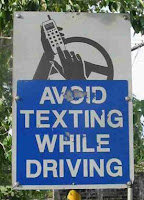
The main disadvantage of text messaging is “texting while driving”. In the past year over one hundred-thousand Americans died because of texting while driving. Did you know that when texting, a person’s steering capability goes down ninety-one percent? Or how about that drivers are six times more likely to get into a car crash while dialing a number into their phone?


Figure 2


Another issue text messaging has brought about is “sexting”. Sexting is the act of sending sexually explicit messages or photos electronically. There are many consequences to sexting, some which have led many teens to suicide. In the journal article below, eighteen year old Jesse Logan, committed suicide after taking part in a “sext conversation”.


V. Journal Article Review


It all started when Jesse Logan sent a nude picture of herself to her boyfriend. When they broke up, he sent it to everybody he knew at school. For the next two years Jesse was a victim of harassment. At times she was afraid to go to school, and she even fell into depression. In May 2008, Jesse decided to tell her story to a Cincinnati television station. She said “I just want to make sure no one else will have to go through this again.” Two months after this interview, Jesse Logan was found dead in her bedroom. She hanged herself.


Citations:


Unknown. (2011, May 5) History of SMS Text Messaging. Retrieved from: http://www.mobilepronto.org/en-us/the-history-of-sms.html


Matti Kalliokoski. (2008, July 4) The Reluctant Father of SMS- Matti Makkonen. Retrieved from: http://www.finland.or.kr/public/default.aspx?contentid=137076&nodeid=35145&contentlan=2&culture=en-US


Joseph Devine (2011, May 1) Texting and Driving Statistics. Retrieved from: http://textinganddrivingstatistics.com/


Journal Article:

Mike Celizic. (2009, March 6) Her Teen Committed Suicide over ‘sexting’. Retrieved from:

http://today.msnbc.msn.com/id/29546030/ns/today-parenting/


The History of the Pitching Machine By Jay Jenkins

Introduction:

The pitching machine was first invented in the late 1800’s by Charles Hinton. He created a hand fed pitching machine that served up pitches for the hitters. The machine can pitch in many different speeds and angles.


Discovery:

Charles Hinton made this invention in 1897. He was a scientist at Princeton University. Hinton made the pitching machine for the Princeton Tiger’s baseball team. This allowed the players to work on an assortment of pitches that they might see in a game. At first, the invention seemed to be a great contribution until the power of the machine caused several injuries. The Princeton baseball team stopped using it because of the injuries but never the less; Hilton’s pitching machine was a big breakthrough.

Investigator:

It was safe to say that Charles Hinton was a man of science and math. He wrote Science Fiction and taught mathematics and science at the schools he was employed. Hinton hit a couple of speed bumps in his life along the way. He was accused of being married to two women at one time, which was eventually proven true. Some say a lot of the reason he was let go from the Princeton University staff was due to his invention, the pitching machine, causing so many injuries. Years later, Hinton showed the pitching machine to University of Michigan and received positive feedback. This is what really got his invention “off the ground”. Charles Hinton died in 1907 due to cerebral hemorrhage.


Impact on Humanity:

Pitching Machines have definitely affected the game of baseball. It has allowed players to improve their skills by trying to hit any pitches thrown whether it be a fastball, curveball, slider or change-up. The pitching machine is able to pitch all of these pitches. It is used in both baseball and softball in leagues from little league to the Major Leagues. Also, since pitching machines move through in such a rapid fire sequence, sometimes you can turn it upside down and quickly send out the baseballs in the form of a ground ball for a fielder. This allows fielder to get a lot of practice quicker. Oppose to if a coach was slowly hitting a fielder groundballs one after another.


Journal Articles:

“History of Pitching Machines” is a good article. It compares and relates to how far the machine has come. It shows how colleges and high school teams use it and find it very productive. It explains how different the original model is compared to the models beings created today. There are so many different versions of pitching machines that helps a majority of teams. This is why the pitching machine is in such high demand when it comes to the baseball world.


Eldred, Eric (1996) “Charles H. Hinton”

(2009) “The History of the Pitching Machine”

Rivers, Dacia (2010) “History of the Pitching Machine”

The Invention of JELL-O: Because Everybody Enjoys a Little Wiggle Room!


The Invention of Jell-O:
Because Everybody Enjoys a Little Wiggle Room
By: Katerina Parent           
Due Date: May 2nd, 2011   


         I.  Introduction
Jell-O gelatin is a dessert that everybody knows. It has been around for over 100 years and is the most successful gelatin company. After a rocky start of virtually no sales, the worthless company bounced from businessman to businessman, each man losing hundreds of dollars each time. But, after intense advertising, people began to like Jell-O gelatin, because of its fun color and unique taste, and business starting booming.
II.  Discovery
In 1845, a philanthropist and inventor named Peter Cooper was given the patent for a gelatin dessert. His gelatin was very different than the Jell-O we eat today. It was not as well prepared as chefs would have liked, so they relied on using already made gelatin. After years of attempting to sell his very unpopular gelatin, Cooper looked for relief from the mess he had created. He looked to Pearle B. Wait, who was working on his own type of gelatin based on Cooper’s that would be so much better, and sold him the patent.
      In 1897, Pearle B. Wait created a fruit-flavored version of Cooper’s bland gelatin. There were only four flavors at the time: strawberry, raspberry, orange, and lemon. The naming of gelatin as Jell-O is accredited to Wait’s wife, May Davis Wait. Once the Wait’s began their Jell-O business, Pearle realized that he was clueless about the business world and sold his company to his neighbor, Orator Francis Woodward in 1899 for $450. Business did not pick up, and Woodward began to loose hope. No one wanted to buy Jell-O gelatin. After months of losing time and money of gelatin, Woodward had reached his boiling point, and sold the company for just $35.
The man who would take over the company was the previous superintendent.  The very first advertisement for Jell-O debuted in Ladies’ Home Journal in 1902, which showed happy, fashionable women in aprons who said that Jell-O gelatin was “America’s Most Famous Dessert.” Then in 1904, an advertisement ran with a little girl playing with Jell-O in her nursery. The slogan this time was “You can’t be a kid without it.” As Jell-O became increasingly popular, the first Jell-O cookbook was released with two new flavors: chocolate and cherry. After both advertisements ran for about six month, the Jell-O business finally picked up. Busy moms were grateful for an easy desert they can make in minutes, and kids loved the taste. Jell-O became the dessert to beat!

III.           Biography of Inventor

Not much information is known about Pearl B. Wait. He was a carpenter and a cough medicine manufacturer before he became the inventor of Jell-O gelatin. He lived in LeRoy, New York with his wife May Davis Wait. After inventing Jell-O he was excited to start his own business, but soon got nervous at the thought of running it without any experience. He knew it would be best to sell it to his experienced neighbor and returned to his quiet life, and his modest job.  
IV.            Impact on the World
During the early 1900’s, as immigrants were arriving on Ellis Island in New York City, they were served Jell-O gelatin as a “Welcome to America.” Jell-O was helpful again with feeding those who had nothing during WWII, when most ingredients such as shortening and sugar were scarce. People relied on one-crust pies filled with Jell-O gelatin or pudding to fill their talkative tummies.
Now, Jell-O has over 14 flavors: strawberry, raspberry, orange, lemon, peach, vanilla, chocolate, and orange-coconut tapioca pudding, apple, grape, black cherry, black raspberry, Americana Rice and Pistachio pudding, and more!

   In 1974, Bill Cosby joined the Jell-O team as a spokesperson and appealed to women and children with his kind, funny nature. He helped sales increase and supported a great cause.
Today, Jell-O is known throughout the world. About 400 million packages of Jell-O are produced every year, and more than one million packages are purchased every day. It has definitely impacted the world in a positive way, in that it is helpful to busy moms, and a fun dessert for playful kids. Whether creamy chocolate pudding, or bouncy apple gelatin, Jell-O is a delicious treat people love to eat!
V.              Journal Article Review
            My journal article was very helpful in that it gave me detailed information about Jell-O and the Jell-O company. But, it did not provide me with any information of the inventor of Jell-O, Pearle B. Wait, or even the creator of gelatin, Peter Cooper. It talked a lot about the shape and the design of Jell-O, which I thoroughly was not interested in, but it did discuss how and why the business boomed and the effects of advertising.
VI.            Bibliography (APA)

Belluscio, Lynne (2006) The JELL-O Gallery. Retrieved 4/30/11 from  http://www.jellogallery.org/jellohistory.html
Great Idea Finder, The (2007) JELL-O. Retrieved 4/29/11 from http://www.ideafinder.com/history/inventions/jello.htm
Heckbert, Paul (1988) JELL-O Brand Gelatin. Retrieved 4/30/11.
           http://www.prtal.acm.org
Kraft Foods (2010) The History of the Wiggle. Retrieved 4/29/11 from http://www.kraftbrands.com/jello/explore/history/